




By Steve Cuff
(Story written in mid-July 2026, and published in the August 2026 edition.)
NO two seasons are ever the same, and every year brings different snow conditions at Perisher. Guests may notice subtle changes, but generally they arrive and just start sliding on what trails and lifts are open at the time.
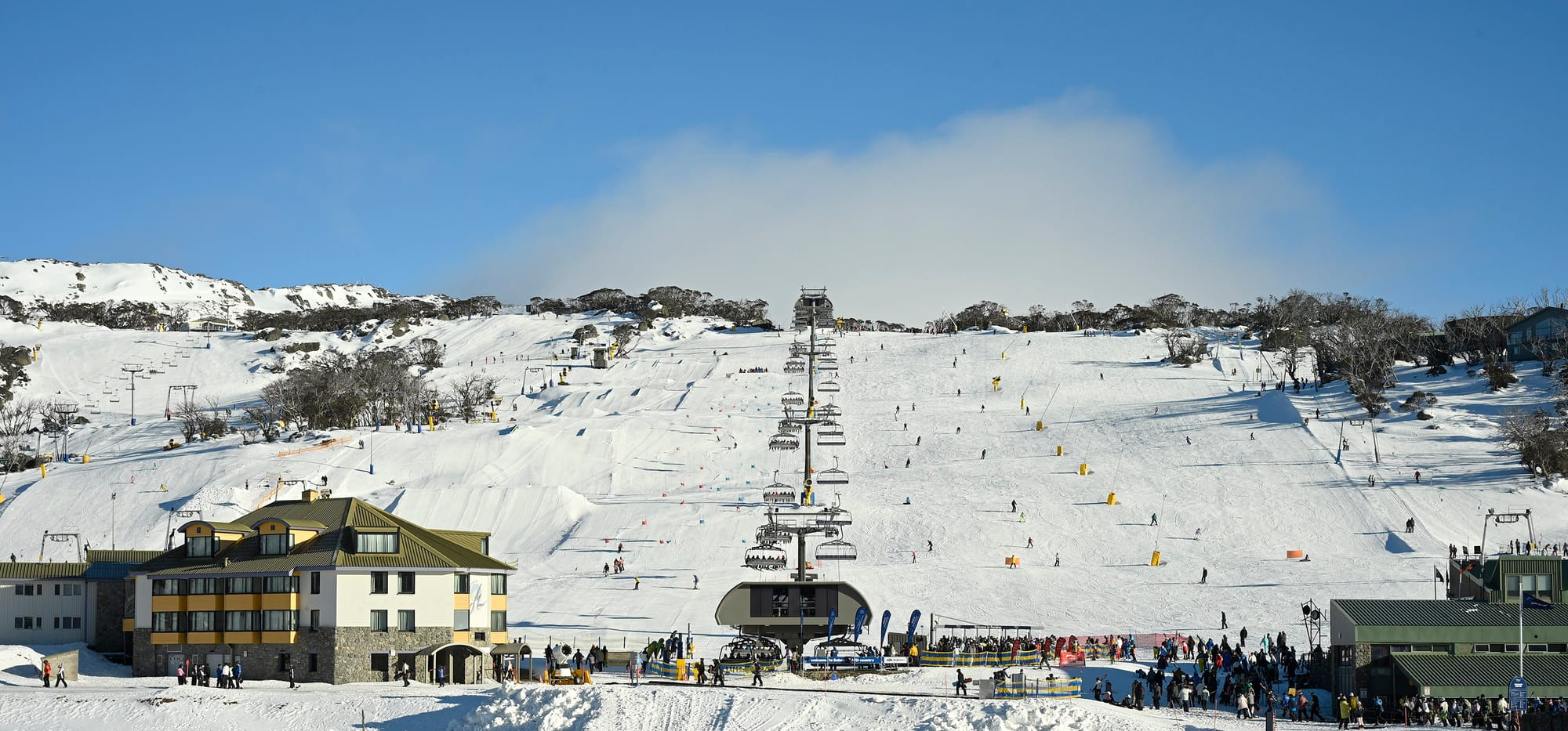
On the company's side of the ledger, opening the mountain is not like entering your office and turning on the computer. Each resort area, all 45 lifts, and the terrain are assessed individually to ensure snow conditions are safe for guests. With 1245 hectares to consider, it's like one big mountain puzzle, but with a structured process to follow.
Andrew Kennedy, Perisher’s Director of Mountain Operations, is passionate about the resort and attends to multiple operational details daily. Having worked at the resort for 37 years and managed several departments, he understands the intricacies of snowfall and its impact on every aspect of the mountain.
THE PROCESS
Early season is about opening terrain as soon as possible. Mother Nature was late to the 2026 party, and snowmaking was front of mind. When temperatures allow, Perisher can produce huge amounts of snow.
“The Perisher snowmaking usually kicks off quite early, even from mid-May we're ready to go here at Perisher for the Front Valley area. You're looking at Front Valley, up to Mid Station, down to Leichhardt, to open intermediate skiing,” said Andrew Kennedy.
“Smiggin’s snowmaking has come a long way the last few years; a lot of investment down there with automated guns and that's made a real difference to that J-Bar area.”
After a large snowfall, whilst it looks good, an early season dump of powder snow is not the ideal base layer to fall onto warm vegetation. Snow with a high moisture content is preferred early on, as its heavier weight is more suitable for pressing down vegetation in readiness for subsequent snowfalls.
Andrew says if there is no base, they can’t open terrain immediately. They need to pack the snow and plan for staff to operate lifts, which includes a lengthy induction and training.
There is a procedure that follows snowfall to ensure the longevity of the snowpack. Individual T-bar tracks must be built, and all lifts need their load and unload areas shaped and built before any lift opens.
“It can sometimes take a week before the snow has compacted enough for us to make an assessment as to what additional terrain we could open. Once it’s gone through a couple of freeze-thaw cycles, it’s much easier to move the grooming machines around. So it's not just the powder snow that allows us to open new runs. If you’ve got fresh snow with no base layer, you are likely to break straight through to the undergrowth.”
SNOW FENCES
Cruising the resort, you see wooden fences erected in what might seem strange locations. In fact, these are strategically placed to capture snow. As snow whips across these areas, the fence slows down momentum and captures the blowing snow. Large snow drifts are then cleared and pushed to create runs and increase snowpack depth.
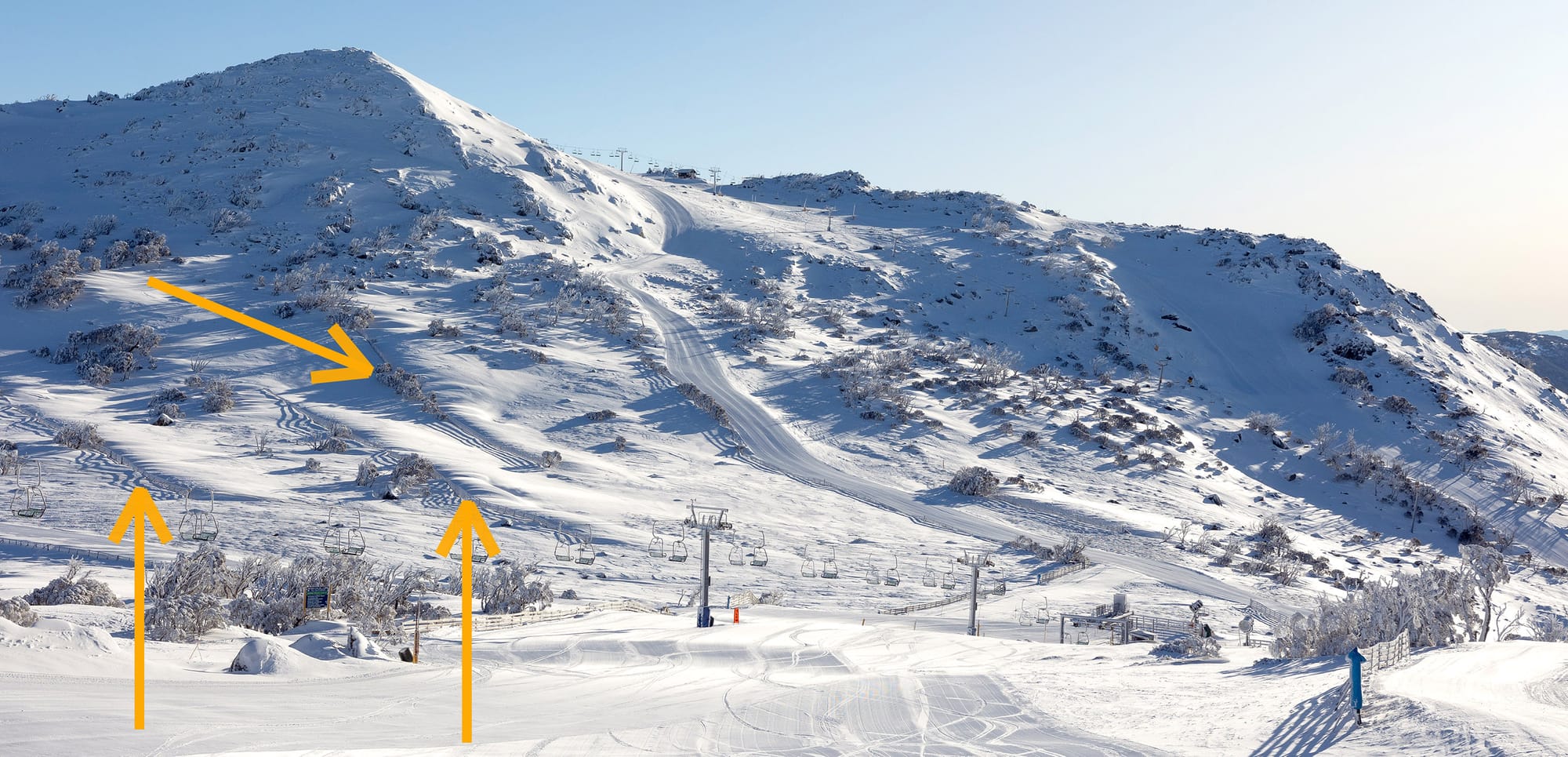
“Most of the snow comes from the west/south west direction, so the fences are generally set up at right angles to be most effective. We also have larger mobile fences that get moved with grooming machines. We position the portable ones in the middle of what would normally be a ski run to catch the snow. Prior to that run opening, we can take them away, groom it out, which all helps to get those runs open quicker.”
“The desert area at Blue Cow in the saddle, near Side Saddle, the wind absolutely howls through there and even in the middle of winter, you'll see large snow drifts in behind the fences. From there we can push it out and make runs such as the run from the top of Guthega back to Blue Cow and Side Saddle. Without those fences, the snow would just blow further into areas where we couldn't retrieve it.”
RESORT AREAS
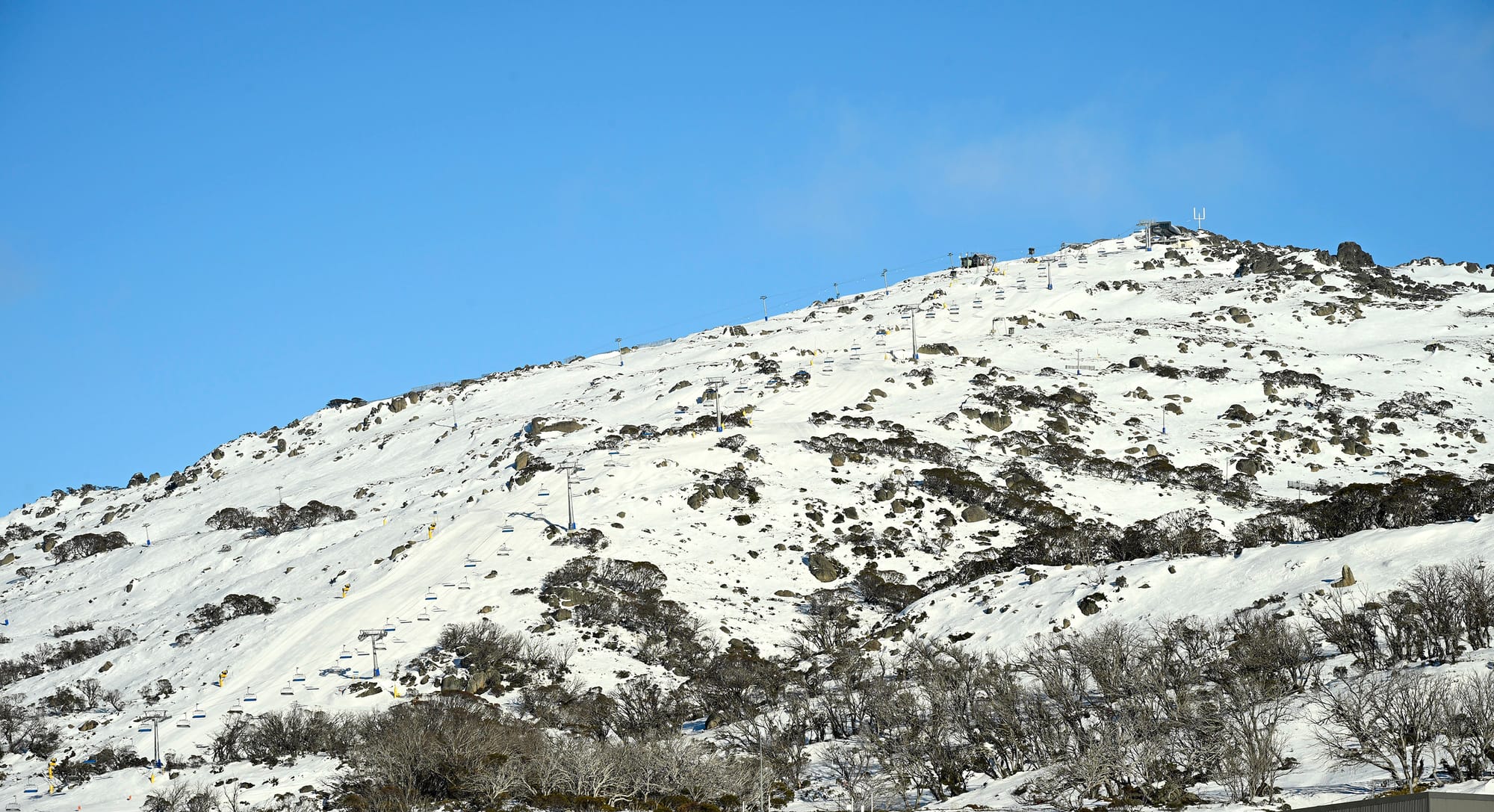
On Mt Perisher, there is good snowmaking on Legends run under the Mt P 6 high-speed chairlift. Earlier this season, the MT P 6 opened when the official snow depth was 54 centimetres. But with snowmaking on the run, the depth would have been much deeper.
People often underestimate how much added depth snowmaking affects these runs. It's essential to continue to top up the snow.
“The Blue Cow precinct, it is a big beast to get up and running, and you've got to make sure you have enough experienced staff to get that pod at the resort functioning. The Ridge Chair initially opens for skiers on the Roller Coaster, a narrower run with a high concentration of snowmaking guns.”
“For Excelerator itself, you need a 30-centimetre base cover right over that whole run. Once you push the snow out from the snowmaking, it is a wide run so whilst we do have a lot of guns on there you need that combination of snowmaking and natural snow to get that long iconic run open.”
Areas like Pleasant Valley with its undulating terrain often need more snow to fill in the entire run, but the chairlift opened in mid-July along with the Brumby T-bar on a 54-centimetre base. As it is gentle terrain and people move through more slowly, Perisher can open it while some pockets await more snow.
Guthega does not have snowmaking and relies entirely on natural snow. The Blue Calf T-bar is often the first to open, and then the Blue Cow T-bar and the Freedom chair.
“One of the earlier pioneers at Guthega, Karl Gunter, did a lot of slope grooming work, which allows us to usually open Guthega on around a 50-centimetre base. To get that, you generally also need some wind, as we do have a lot of snow fences on that Guthega side which faces prominently in a westerly direction.”
“Firstly, we haven’t had too much natural snow, but also when it has snowed, we haven't had the sort of wind to fill in the fences. A lot of the fences on the Guthega side are still quite bare,” said Andrew, in mid-July.
Andrew explained that with an 80-plus-centimetre snow depth, they can open all the runs except Olympic and, on occasion, North Perisher. A comfortable base is over a metre, which means a few more of the troughs and hollows would be filled.
The grooming crew should take credit for opening so much terrain by mid-July. “Matt Klemm, Sean Gragnolini, Cade Robinson, and the rest of their grooming team have done an amazing job this winter,” said Andrew.
The Perisher website has snow reports, including snow depth, full lift status, a grooming report, a road report, and weather details, updated daily for guests.

Note: Since this story was written in mid-July 2026, the snow depth has increased to 88cm by August 3rd, with more snowfalls predicted through August. Perisher have had up to 37 lifts open.