





THE quest for Dave Warby and his Spirit of Australia II team to break Dave’s father's world water speed record set in 1978 has been a long process. Ken Warby set the record of 511.11 km/h (317.59 mph), a speed Dave is attempting to beat.
Numerous weekend visits to Blowering Dam at Tumut over many years have been valuable for testing. Each venture onto the water has been important, and the knowledge and data gained from incremental speed increases and boat adjustments have been valuable.
But the next phase Dave embarks on, and the data gained, could unlock the final push to the record. And the boat will not even enter the water for this new data to be recorded.
In late October, Dave travelled to the United Kingdom, where his boat has been undergoing computational fluid dynamics testing, where a three-dimensional (3D) scan of the boat is then simulated in wind tunnel testing.
The Spirit of Australia II boat had previously been tested in a wind tunnel, but not for 3D performance testing, as it is now undergoing. Until now, the team knew they really needed this extra technology but pushed on anyway.
“The problem we've had, we know the design’s been wind tunnel tested, and proven in a wind tunnel, but the differences between Dad's boat and my boat, it’s really the setup, and we haven't been able to get anyone in Australia that'll actually wind tunnel our setup,” said Dave Warby.
He explained that, in Australia, the issue compared to his father’s era was that no one would take the risk of wind-tunnel testing the setup because of the liability if anything went wrong.
“Through going to the UK, we got a lot of interest in people wanting to help us with wind tunnelling. I can't say who, that'll come out later, but it's quite an impressive organisation.”
Explaining the testing in more detail, Dave said they can run the boat through the computer at any speed. “It's the software that they basically build and design aircraft off now. When an aircraft is built, they actually test it in what's called CFD, computational fluid dynamics. We can run the boat through to any speed we want.”
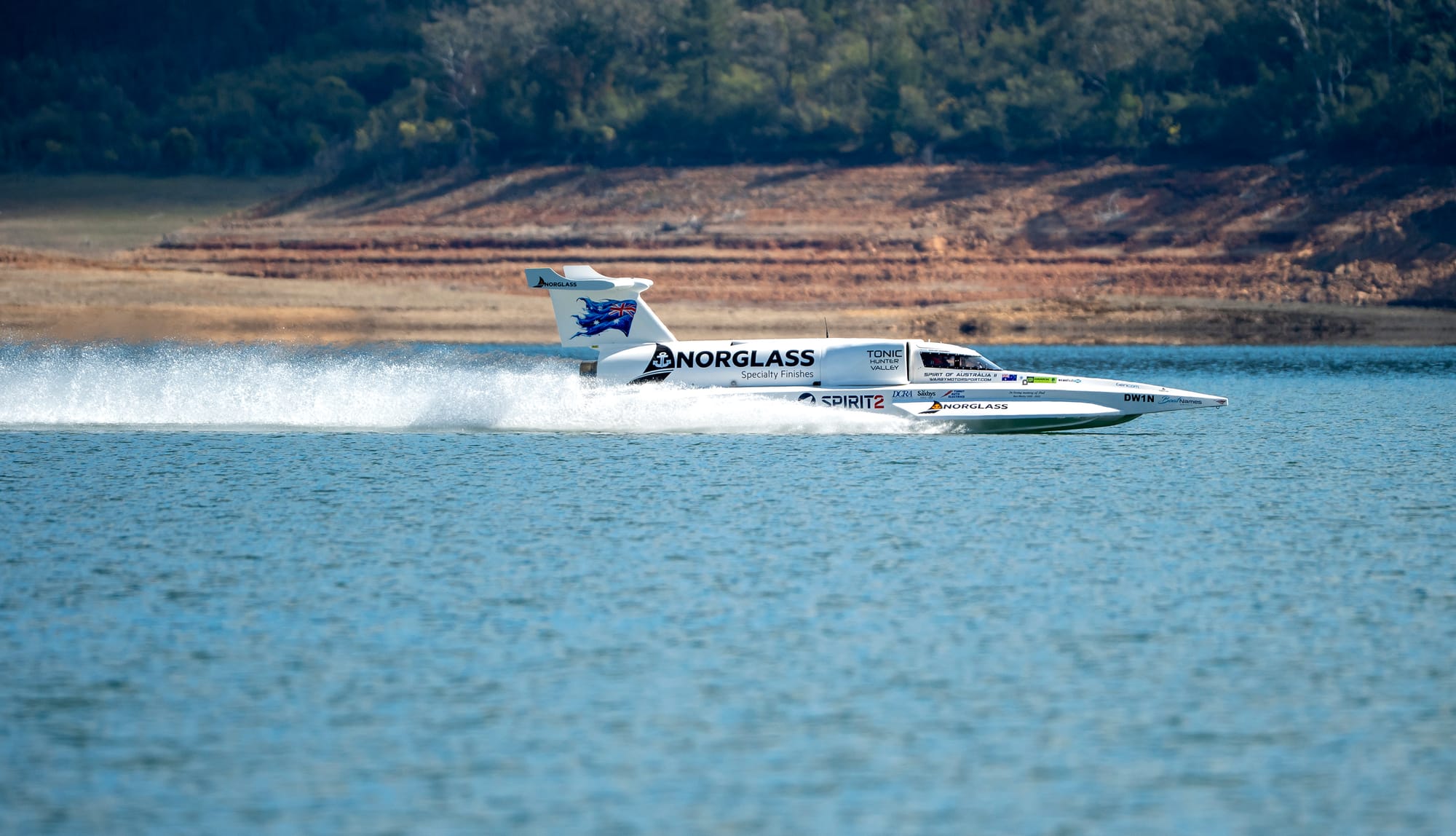
The advantage is to see how air flows over Spirit of Australia II at simulated speeds. Dave has acknowledged that at their current top speed of 280mph, he can feel a slight vibration in the boat. The solution is to make minor adjustments on the simulator based on the data received. And once they are happy with the revised results, then transfer those changes over to the actual boat.
Ideally, the team had plans to visit Blowering Dam in December, but they will wait for the final simulator results. Because they must give up to ten weeks' notice to water authorities, they'll most likely return to Tumut in the first quarter of 2027, aiming to push to world-record speed. Then, once they're satisfied with the boat’s handling, they’ll try for the record.
“You can see the airflow over the whole boat. My boat weighs different to dads, it's a bigger boat, it's got different power, so we can compare those things between my father's boat and my boat on a computer and make the changes on there before we do it on the boat. That's been our biggest downfall, we haven't been able to get anyone to test our boat. We've had to do it via trial and error, so now we're getting that done we'll literally be able to see the problems and fix the problems pretty quickly.”
Commenting about his own on-water testing, Dave noted that Donald Campbell spent nine weeks next to the water trying to break the record. “We get a day and a half every now and then, so it's been hard to develop a boat without the technical side of the wind tunnelling. But we've kind of kept that to ourselves going through this project, but now we're getting it done that's gonna make a big difference to what we can do with the boat.”

Warby Pilots Bluebird K7
New wind tunnel testing became possible after Dave Warby spent time in the UK before winter, where he was invited to pilot Bluebird K7, the jet-powered hydroplane boat in which Donald Campbell set seven world water speed records between 1955 and 1964, peaking at 276.33 mph on Lake Dumbleyung in Western Australia.
On January 4, 1967, Campbell attempted to push the Bluebird K7 past the 300mph mark on Coniston Water in the English Lake District. After an initial run of 297 mph, he turned for the return leg and reached over 320 mph. The boat lost aerodynamic stability, lifted from the water, somersaulted, and broke apart, killing Campbell instantly.
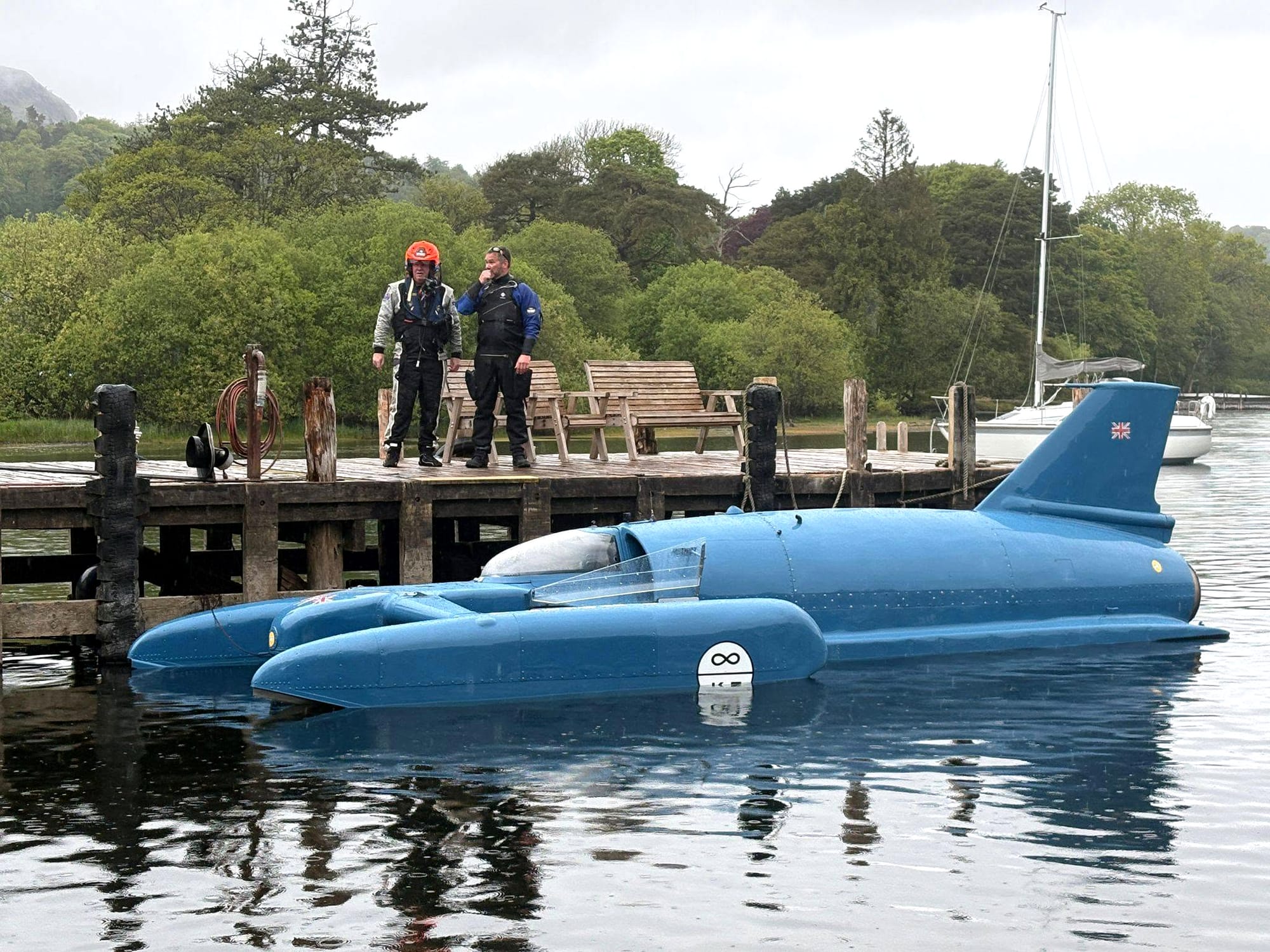
The wreckage of K7 was recovered from Coniston Water in 2001 and restored. It is now housed at the Ruskin Museum in Coniston and, with Dave Warby at the helm, returned to the water for what Dave described as an emotional experience.
“It was really a spiritual experience. When the boat went in the water, people in their 70s and 80s were all crying, it was very emotional for the people at Coniston. They were there when the boat set its many records and supported it, and, you know, it's a tragic end,” said Dave about the atmosphere at Coniston.
“We did have a few technical issues with the (K7) boat, it was quite strict running conditions, but when we managed to get it up on top of the plane, the family and the former crew who were involved with the boat, they were all in tears crying. It was just very surreal.”
“It was not till you got home and really had to think about what you were doing that it sunk in.”



